Understanding presidents on paper money is more than just a fun trivia topic—it's a window into American history, culture, and the evolution of the nation’s financial system. Every time we spend a dollar, we interact with figures who shaped the United States, left profound legacies, and transformed the nation through their leadership. But which president appears on which bill? Why were these individuals chosen? And how has U.S. currency changed over time?
This comprehensive guide explores every U.S. paper bill in circulation, the history behind the portraits, and the presidents featured on each denomination. Whether you’re a collector, historian, student, or simply curious, this article provides a complete, up-to-date overview.
1. Why Presidents Are Featured on U.S. Paper Money
The decision to put presidents on paper money was not originally part of America’s design. Early U.S. currency during the 1700s and early 1800s featured allegorical figures, eagles, shields, and scenes from American life. Banks were even allowed to issue their own notes, which meant thousands of designs circulated across the country.
It wasn’t until the Civil War and the formation of a national currency system that leaders decided U.S. money needed:
-
Consistency
-
Recognition
-
Security against counterfeiting
Presidents were chosen because they represented national unity, leadership, and historical importance. Their portraits were widely recognized and difficult for counterfeiters to imitate.
Today, the rule remains that living people cannot appear on U.S. currency, ensuring choices reflect historical significance rather than contemporary politics.
2. The History of Portraits on U.S. Currency
During the 1800s, the U.S. government began transitioning from bank-issued notes to standardized federal currency. By 1929, the Treasury adopted the smaller bill size we still use today and assigned permanent portraits to each denomination.
These assignments were based on:
-
National contributions
-
Recognizable historical leadership
-
Symbolic importance
The portraits we know today have changed very little since then, making them some of the most consistent symbols of American identity.
3. Presidents on Paper Money: Complete List by Denomination
Below is a complete breakdown of every paper bill currently in circulation and the president (or historical figure) featured on each one.
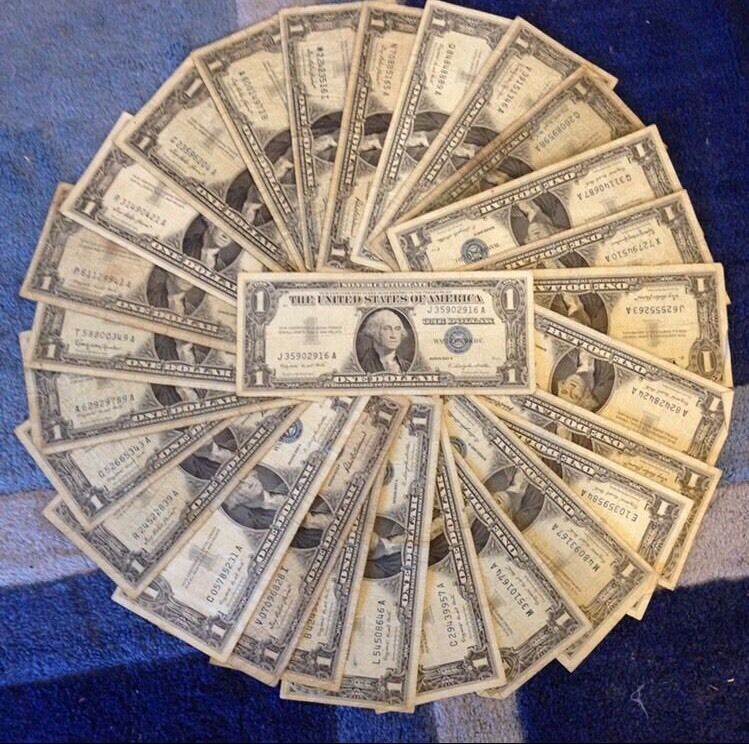
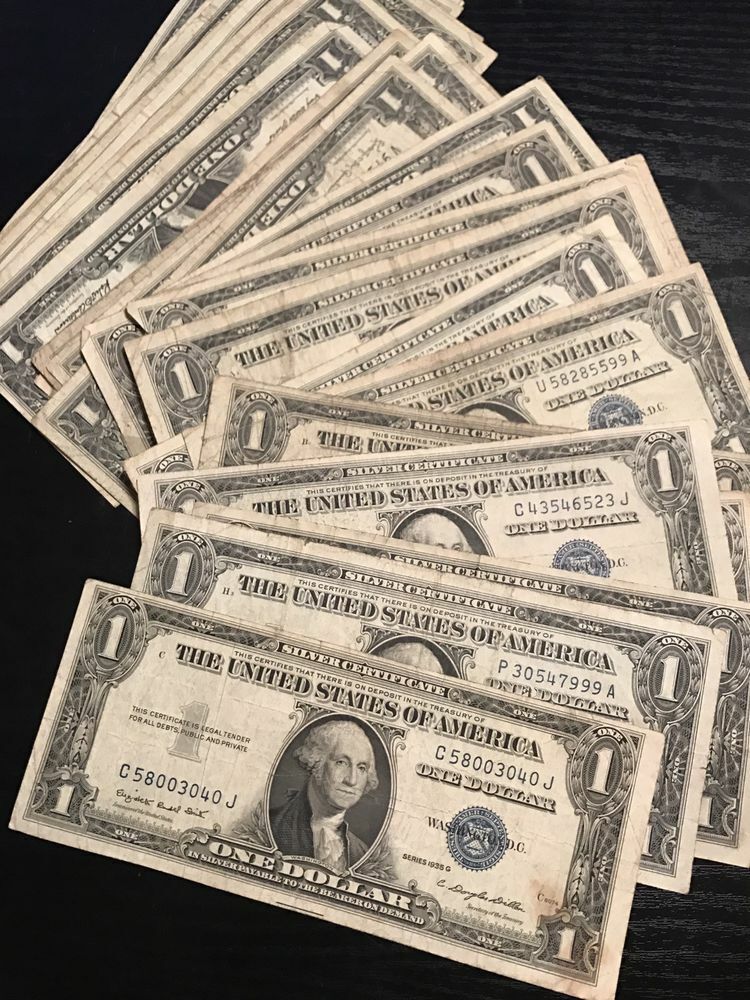
$1 Bill – George Washington
-
President: George Washington
-
Term: 1789–1797
-
First Appearance on Currency: 1862
-
Current Design Introduced: 1963
The $1 bill is the most widely circulated U.S. note. George Washington’s portrait is based on Gilbert Stuart’s iconic painting and symbolizes foundational leadership and national unity.
Why Washington Was Chosen
-
First President of the United States
-
Leader of the Continental Army
-
Universally recognized founding figure
Reverse of the $1 Bill
The back features the Great Seal of the United States, including the eagle, shield, pyramid, and “In God We Trust.”
$2 Bill – Thomas Jefferson
-
President: Thomas Jefferson
-
Term: 1801–1809
-
First Appearance: 1862
-
Current Design Introduced: 1976
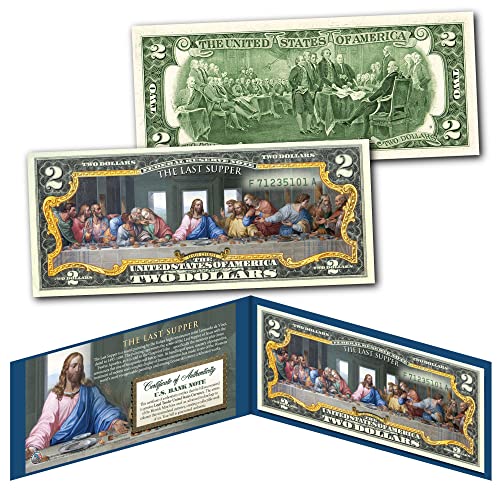
The $2 bill is famous for being rare in circulation, though it remains fully legal tender. Thomas Jefferson—principal author of the Declaration of Independence—appears on the front.
Why Jefferson Is on the $2 Bill
-
Author of the Declaration of Independence
-
Third President of the United States
-
Responsible for the Louisiana Purchase
Reverse of the $2 Bill
Features John Trumbull’s “Declaration of Independence” painting, chosen during the Bicentennial for historical importance.
$5 Bill – Abraham Lincoln
-
President: Abraham Lincoln
-
Term: 1861–1865
-
First Appearance: 1914
-
Current Design Introduced: 2008
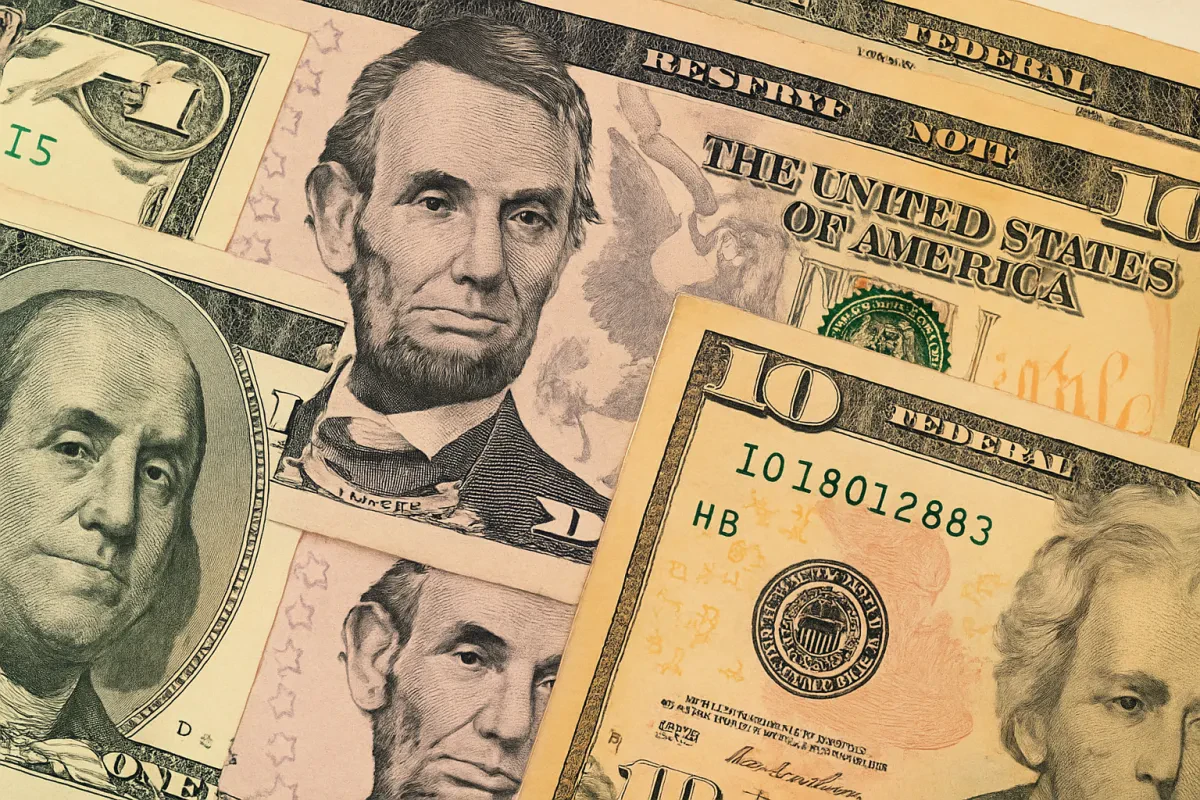
The $5 bill honors Abraham Lincoln, widely regarded as one of America’s greatest presidents.
Why Lincoln Is on the $5 Bill
-
Led the Union during the Civil War
-
Issued the Emancipation Proclamation
-
Preserved the nation during its greatest crisis
Reverse of the $5 Bill
Displays the Lincoln Memorial, with subtle engravings of the statue inside.
$10 Bill – Alexander Hamilton (Not a President)
-
Position: First Secretary of the Treasury
-
Not a U.S. President
-
First Appearance: 1861
-
Current Design Introduced: 2006
The $10 bill features Alexander Hamilton, one of the few non-presidents on U.S. paper money.
Why Hamilton Was Chosen
-
Founder of the U.S. financial system
-
Creator of the Treasury Department
-
Architect of the National Bank
Hamilton’s influence on American economics earned him a permanent place on this denomination.
Reverse of the $10 Bill
Features the U.S. Treasury Building, a symbol of Hamilton’s legacy.
$20 Bill – Andrew Jackson
-
President: Andrew Jackson
-
Term: 1829–1837
-
First Appearance: 1928
-
Current Design Introduced: 2003
The $20 bill features the seventh president, Andrew Jackson.
Why Jackson Is on the $20 Bill
-
A symbol of early American populism
-
A strong military leader (Battle of New Orleans)
-
Advocate for greater democratic participation
Reverse of the $20 Bill
Shows the White House.
Possible Future Change
There have been ongoing discussions about replacing Jackson with Harriet Tubman in future designs, but no official release date has been finalized.
$50 Bill – Ulysses S. Grant
-
President: Ulysses S. Grant
-
Term: 1869–1877
-
First Appearance: 1914
-
Current Design Introduced: 2004
The $50 bill showcases Grant, the Union general who led the U.S. to victory in the Civil War.
Why Grant Is on the $50 Bill
-
Commanding General of the Union Army
-
Instrumental in ending the Civil War
-
Supported civil rights policies during Reconstruction
Reverse of the $50 Bill
Features the U.S. Capitol.
$100 Bill – Benjamin Franklin (Not a President)
-
Position: Founding Father
-
Not a President
-
First Appearance: 1914
-
Current Design Introduced: 2013
The $100 bill, the highest denomination still in circulation, features Founding Father Benjamin Franklin.
Why Franklin Was Chosen
-
Diplomatic powerhouse of the Revolution
-
Inventor, scientist, and statesman
-
Signer of both the Declaration of Independence and the Constitution
Reverse of the $100 Bill
Depicts Independence Hall, where both founding documents were debated.
4. Presidents Who Once Appeared on U.S. Paper Money
Before modern currency stabilized, several presidents appeared on older or discontinued notes:
Historical Presidents on Now-Discontinued Bills
-
James Madison – $5,000 bill
-
Grover Cleveland – $1,000 bill
-
William McKinley – $500 bill
-
Woodrow Wilson – $100,000 Gold Certificate
-
James Monroe – Early Treasury notes
-
John Quincy Adams – Various 1800s notes
These bills were discontinued in 1969 due to lack of use and concerns over illicit money movement.
5. Why Some Bills Feature Non-Presidents
Only four out of the seven major denominations feature presidents. The $10 and $100 include Hamilton and Franklin because:
Hamilton
-
Created the U.S. financial and banking system
-
Was the first Secretary of the Treasury
Franklin
-
A founding statesman of unmatched influence
-
Represented diplomacy, innovation, and national identity
These figures made contributions equal to—if not greater than—many presidents, justifying their inclusion.
6. Future Changes: Will New Presidents Appear on Currency?
American currency rarely changes, but discussions continue regarding:
Potential Updates
-
Adding more diverse historical figures
-
Updating security features
-
Replacing Andrew Jackson with Harriet Tubman on the $20 bill
No confirmed timeline exists, but currency redesigns typically take many years due to the complexity of security and anti-counterfeiting measures.
Summary Table of Presidents on Current U.S. Paper Money
| Denomination | Portrait | President? | Term / Role |
|---|---|---|---|
| $1 | George Washington | Yes | 1789–1797 |
| $2 | Thomas Jefferson | Yes | 1801–1809 |
| $5 | Abraham Lincoln | Yes | 1861–1865 |
| $10 | Alexander Hamilton | No | First Secretary of Treasury |
| $20 | Andrew Jackson | Yes | 1829–1837 |
| $50 | Ulysses S. Grant | Yes | 1869–1877 |
| $100 | Benjamin Franklin | No | Founding Father |
Conclusion: The History Behind the Faces on American Money
The presidents on paper money are more than artwork—they represent the nation’s founding, its struggles, its triumphs, and its evolution. From George Washington’s leadership to Abraham Lincoln’s courage and Ulysses S. Grant’s service, these portraits tell a story every time a bill changes hands.
Understanding who appears on each bill—and why—helps us: