
The 1894 quarter, part of the Barber Quarter series, stands as one of the most iconic and desirable coins in American numismatics. Collectors pursue it not only for its age, but also for its striking design, scarcity in high grades, and historical significance during the late 19th century. Whether you're a seasoned numismatist or someone researching the value of an inherited coin, understanding the full story behind the 1894 Barber quarter can help you better appreciate its place in U.S. coinage history.
This in-depth guide explores everything you need to know—including minting history, specifications, error varieties, grading, values, and how to identify an authentic 1894 quarter.
What Is the 1894 Quarter?
The 1894 quarter is a U.S. 25-cent coin officially called the Barber Quarter, named after its designer, Charles E. Barber, the Chief Engraver of the U.S. Mint at the time. The Barber design appeared on dimes, quarters, and half dollars minted from 1892 to 1916.
The 1894 issue is part of the early years of the series, when mintages varied greatly and quality control differed from modern standards. Coin collectors value 1894 quarters highly for their combination of beauty, historical charm, and increasing scarcity.
History of the 1894 Barber Quarter
Why the Barber Quarter Was Created
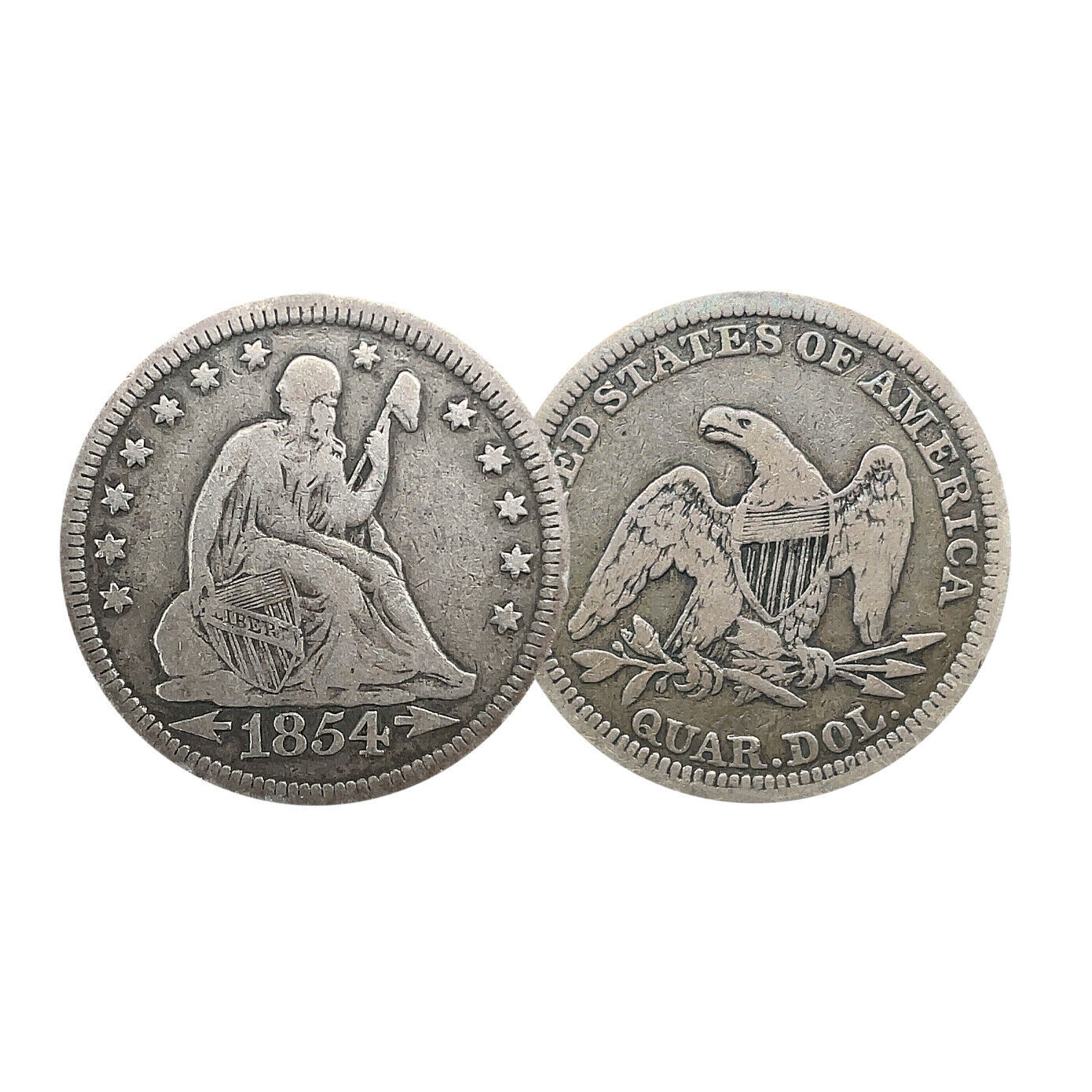
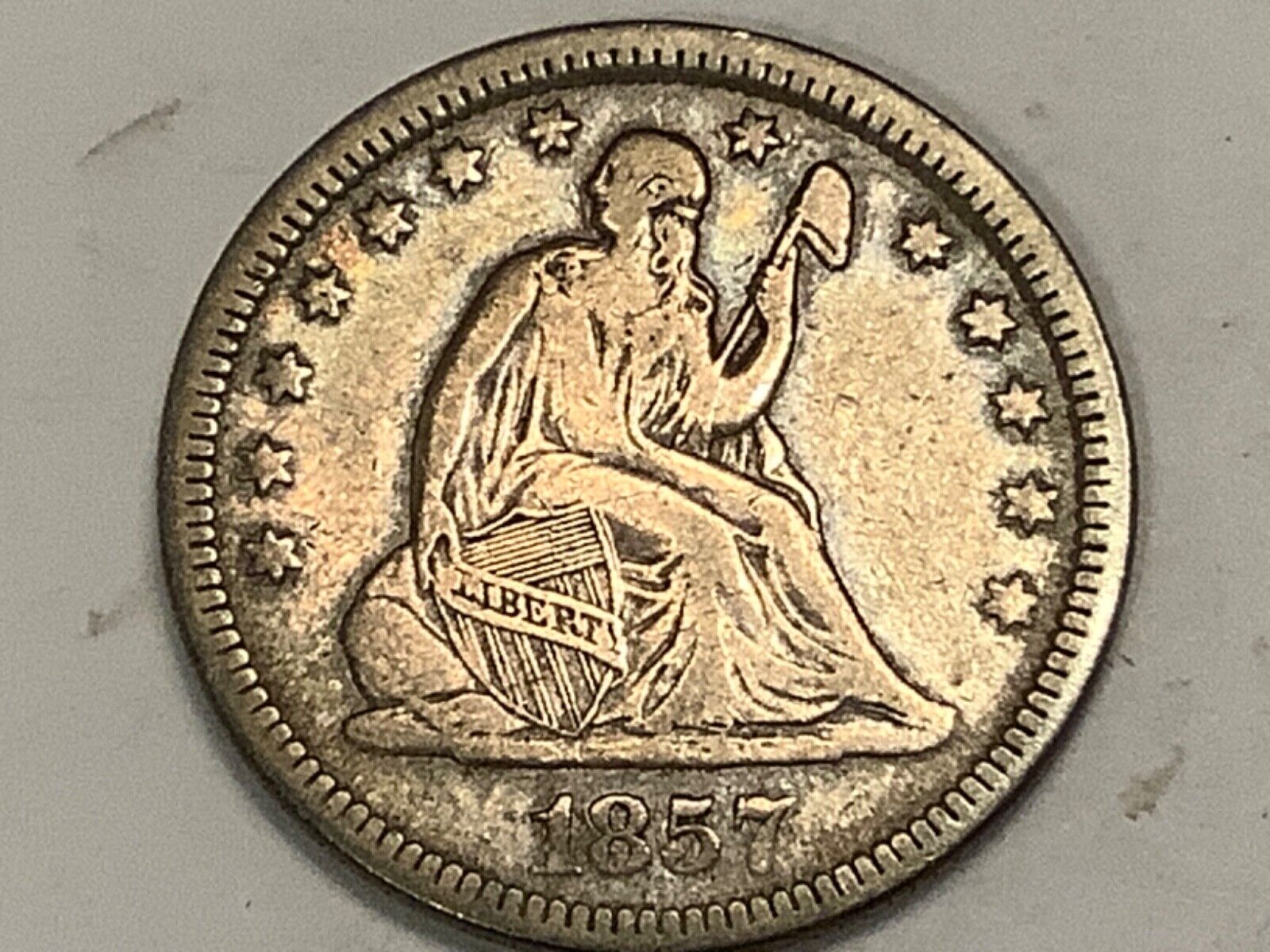
Before the Barber series, the U.S. Mint produced the Seated Liberty design for more than 50 years. By the 1880s, the Treasury and Mint officials believed coinage needed an updated, modern design. A public competition was held, but no artist met the Mint’s expectations—so the task was given to Charles E. Barber.
His new design debuted in 1892, and the 1894 Barber quarter represents the third year of this popular coin series.
Economic Conditions in 1894
The United States experienced a major financial downturn in the early 1890s, including the Panic of 1893. This led to reduced economic activity and, in some cases, lower demand for circulating coinage. As a result, mintages for mid-1890s coins, including quarters, were inconsistent.
Despite this volatility, the 1894 quarter was struck at three major mints:
-
Philadelphia (no mint mark)
-
New Orleans (O mint mark)
-
San Francisco (S mint mark)
While all three mints produced the coin, their mintages—and today’s collectible values—vary significantly.
1894 Quarter Specifications
| Feature | Details |
|---|---|
| Denomination | 25 cents |
| Type | Barber Quarter |
| Designer | Charles E. Barber |
| Composition | 90% silver, 10% copper |
| Silver Weight | 0.1808 troy oz |
| Total Weight | 6.25 grams |
| Diameter | 24.3 mm |
| Edge | Reeded |
| Years Minted | 1892–1916 |
Each Barber quarter contains nearly one-fifth of an ounce of silver, giving it intrinsic bullion value in addition to collector demand.
Mintages of the 1894 Quarter
Understanding mintages is essential for determining rarity. Here are the official production numbers for 1894:
| Mint | Mintmark | Mintage |
|---|---|---|
| Philadelphia | None | 2,456,000 |
| New Orleans | O | 2,816,000 |
| San Francisco | S | 1,036,000 |
While none of these mintage figures are extremely low, many 1894 quarters were heavily circulated, reducing the number of high-grade survivors.
The 1894-S generally commands the highest premium in upper grades due to its comparatively low mintage and scarcity in Mint State (MS) condition.
Design Features of the 1894 Barber Quarter
Obverse Design
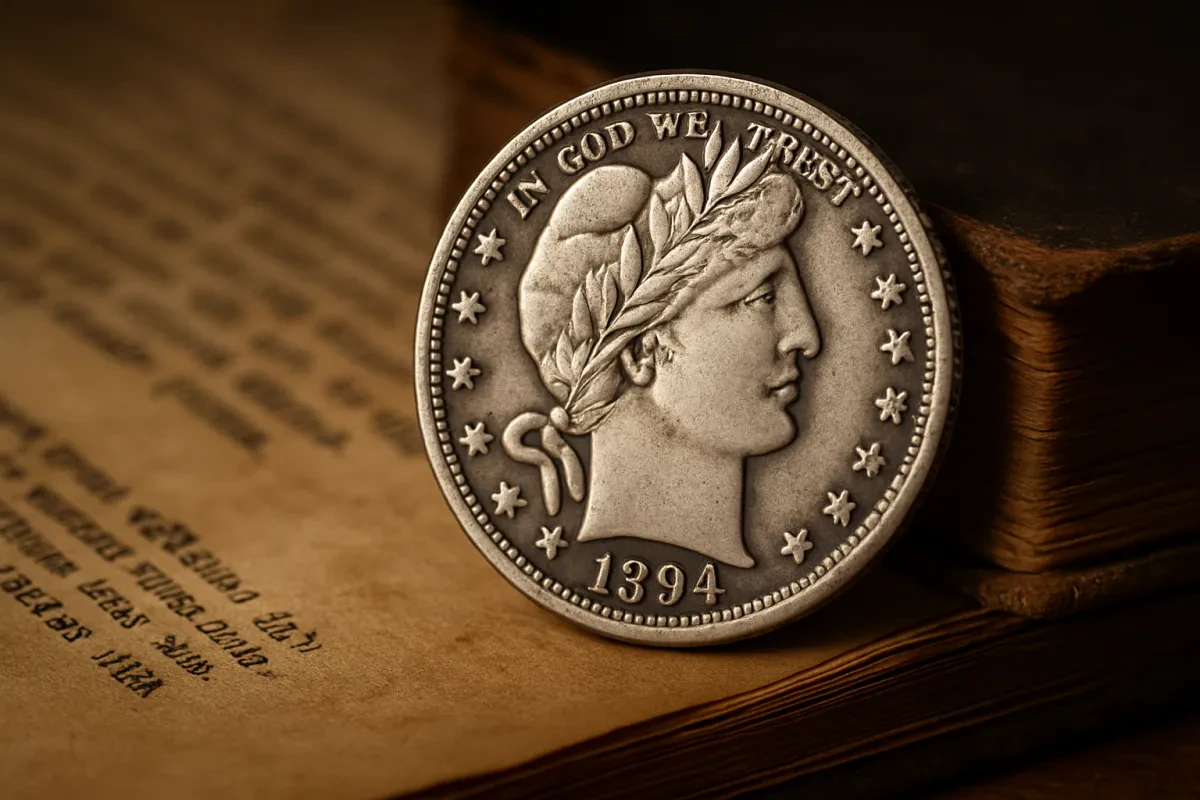
The obverse (front) features:
-
Liberty wearing a Phrygian-style cap with a laurel wreath
-
The motto “IN GOD WE TRUST”
-
13 stars representing the original colonies
-
The date 1894 beneath Liberty’s portrait
Charles E. Barber intended this design to symbolize strength, stability, and patriotism.
Reverse Design
The reverse depicts:
-
A heraldic eagle inspired by the Great Seal of the United States
-
A shield on the eagle’s chest
-
Clutched arrows and olive branch
-
“UNITED STATES OF AMERICA” and “QUARTER DOLLAR” inscriptions
-
Mint mark (“O” or “S”) below the eagle for New Orleans and San Francisco issues
The design’s simplicity and symmetry have long been admired by collectors.
1894 Quarter Value Guide
Values for the 1894 quarter vary based on:
-
Mintmark
-
Condition (grade)
-
Market demand
-
Rarity of high-grade examples
-
Silver spot price
Below is a general overview of typical retail values.
1894 (Philadelphia) Quarter Values
| Grade | Approx. Value |
|---|---|
| Good (G-4) | $25–$35 |
| Very Good (VG-8) | $40–$55 |
| Fine (F-12) | $70–$95 |
| Very Fine (VF-20) | $100–$150 |
| Extra Fine (XF-40) | $175–$250 |
| About Uncirculated (AU-50) | $300–$500 |
| Mint State (MS-60 to MS-65) | $550 to $2,500+ |
Philadelphia coins are the most common for the year but still desirable in high grades.
1894-O Quarter Values
| Grade | Approx. Value |
|---|---|
| Good (G-4) | $30–$40 |
| Very Good (VG-8) | $50–$70 |
| Fine (F-12) | $90–$140 |
| Very Fine (VF-20) | $160–$230 |
| Extra Fine (XF-40) | $250–$350 |
| About Uncirculated (AU-50) | $450–$800 |
| Mint State (MS-60 to MS-65) | $1,200 to $7,500+ |
The 1894-O is significantly scarcer in Mint State condition. Well-preserved examples are highly prized.
1894-S Quarter Values
| Grade | Approx. Value |
|---|---|
| Good (G-4) | $40–$60 |
| Very Good (VG-8) | $75–$115 |
| Fine (F-12) | $150–$250 |
| Very Fine (VF-20) | $260–$400 |
| Extra Fine (XF-40) | $450–$700 |
| About Uncirculated (AU-50) | $900–$1,600 |
| Mint State (MS-60 to MS-65) | $2,500 to $12,000+ |
The San Francisco issue is the standout rarity of the three, especially in MS-63 and above.
Key Factors Affecting the Value of an 1894 Quarter
1. Condition (Grade)
The biggest factor in value is grade. Most surviving 1894 quarters have been heavily circulated. High-grade or uncirculated examples are rare.
Professional grading by PCGS or NGC is recommended for high-value coins.
2. Mint Mark
The mint that produced the coin significantly influences rarity:
-
1894-S = most valuable in high grades
-
1894-O = scarce in Mint State
-
1894 (no mint mark) = more available but still collectible
3. Eye Appeal
Collectors pay premiums for coins with:
-
Attractive toning
-
No distracting scratches
-
Sharp details
-
Original surfaces
Two coins of the same grade can sell for very different prices depending on eye appeal.
4. Cleaning or Damage
Cleaned coins lose significant value. Original, unaltered surfaces are always worth more.
5. Market Demand
The Barber series has seen increasing collector interest. Demand spikes during silver bull markets and numismatic popularity cycles.
How to Identify an Authentic 1894 Quarter
Counterfeits exist, especially in online markets. Here’s what to examine:
Weight and Dimensions
-
Should weigh 6.25 grams
-
Diameter should be 24.3 mm
-
Edge must be reeded
Significant differences may indicate a fake.
Metal Composition
Genuine coins are 90% silver. Some counterfeits use base metals that show different coloration or magnetic properties.
Mint Mark Placement
For 1894-O and 1894-S quarters, the mint mark is below the eagle on the reverse—never above.
Design Details
Look for:
-
Sharp, proportional lettering
-
Correct font and spacing
-
Proper alignment between obverse and reverse designs
Certification
For expensive examples, insist on coins graded by:
-
PCGS
-
NGC
-
ANACS
Certification dramatically reduces the risk of buying a counterfeit.
How to Grade an 1894 Quarter (Beginner Guide)
While professional grading is essential for accuracy, you can perform a basic assessment using the major grade definitions:
Good (G-4)
-
Outlines worn smooth
-
Liberty’s headband barely visible
-
Date readable but worn
Fine (F-12)
-
More detail on Liberty’s wreath
-
Letters bold
-
Eagle features moderately visible
Very Fine (VF-20)
-
Clear headband stripes
-
Almost all major details present
-
Moderate, even wear
Extra Fine (XF-40)
-
Light wear on high points
-
Strong detail and sharp rims
-
Strong eagle feathers
About Uncirculated (AU-50)
-
Almost full detail
-
Very slight friction on highest points
Mint State (MS-60 to MS-65+)
-
No wear
-
May have small contact marks or bag marks
-
Brilliant luster on higher grades
Understanding grade helps you accurately estimate value before selling or purchasing.
Are There Any 1894 Quarter Errors or Varieties?
While 1894 Barber quarters do not have as many prominent varieties as other years, collectors look for:
1. Repunched Mint Mark (RPM)
Some 1894-O and 1894-S coins exhibit repunched mint marks. These are subtle but collectible.
2. Die Cracks or Die Clash Marks
These occur when dies wear or strike improperly. Mild die cracks are interesting but usually add only minor value unless dramatic.
3. Misaligned Dies
Slight misalignment can be collectible, especially when it affects the rim or edges noticeably.
4. Improperly Cleaned or Altered Coins
These are not errors—but worth noting. They reduce value significantly.
The Rarity of High-Grade 1894 Quarters
While millions were minted, only a fraction survive in collectible condition. High-grade coins from the late 1800s are rare because:
-
Coins circulated heavily
-
Many were melted for their silver content
-
Early collectors didn’t save large quantities
-
Mint State storage conditions were poor compared to today
For example, PCGS reports only a small number of 1894-S quarters graded MS-65 or higher—a key reason for their high auction prices.
Auction Records for the 1894 Quarter
Some standout sales include:
-
1894-S MS-67: Sold for over $90,000
-
1894-O MS-66: Surpassed $25,000
-
1894 (Philadelphia) MS-67: Sold in the $30,000+ range
These record prices highlight the intense collector demand for high-end examples.
Should You Buy an 1894 Quarter?
The 1894 quarter is considered a strong collectible for several reasons:
✔ Historic 19th-century coin
✔ Part of a popular, iconic series
✔ Rising long-term collector demand
✔ Silver content adds intrinsic value
✔ High-grade examples appreciate well
However, always buy from reputable dealers and, when possible, seek certified coins.
Tips for Selling an 1894 Quarter
If you’re selling, maximize value by:
-
Getting the coin professionally graded
-
Photographing it in bright, even lighting
-
Avoiding cleaning at all costs
-
Comparing recent auction results
-
Listing on collector-heavy platforms such as Heritage Auctions, GreatCollections, or eBay
-
Considering in-person appraisal at a coin show or dealers
Well-presented coins consistently sell for higher prices.
Conclusion: The Lasting Legacy of the 1894 Quarter
The 1894 Barber quarter is more than just a silver coin—it’s a piece of American history. Minted during a transitional period of U.S. coin design and an economically turbulent era, the 1894 quarter captures the artistry, heritage, and craftsmanship of 19th-century coinage.